
- 0
- By GotCovBlinds
Blackout vs. Room Darkening Shades
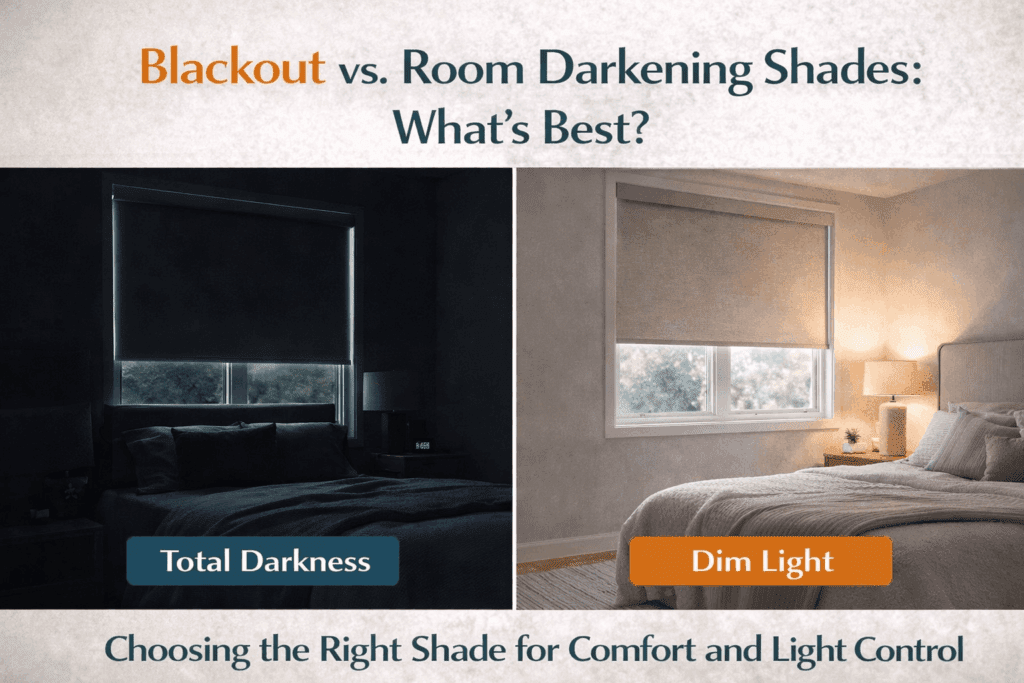
Blackout vs. Room Darkening Shades: What’s Best? Choosing the right window shades isn’t just about style—it’s about how much light you want in your space. One of the most common questions homeowners ask is whether to choose blackout shades or room darkening shades. While they may sound similar, they serve different purposes and are designed for different needs.
Blackout vs. Room Darkening Shades
Light plays a major role in how a room feels and functions, influencing everything from sleep quality to productivity and overall comfort. That’s why choosing between blackout and room darkening shades is more than just a design decision—it’s about creating the right environment for each space in your home. Understanding how each option works can help you make a choice that fits both your lifestyle and your daily routines. At Gotcha Covered Blinds, we help homeowners understand these differences so they can choose the option that fits their lifestyle and comfort preferences.
What Are Blackout Shades?
Blackout shades are designed to block nearly all incoming light. When properly installed, they can create a very dark environment—even during the middle of the day. These shades are typically made with dense, opaque materials and often include features that minimize light gaps around the edges.
Best for:
-
Bedrooms, especially for light-sensitive sleepers
-
Nurseries and children’s rooms
-
Media rooms or home theaters
-
Anyone working night shifts who needs daytime sleep
Blackout shades are ideal when complete darkness is the goal.
What Are Room Darkening Shades?
Room darkening shades reduce a significant amount of light but do not eliminate it completely. They soften incoming sunlight, reduce glare, and create a comfortable, dimly lit environment without making the room completely dark.
Best for:
-
Living rooms and family rooms
-
Kitchens and dining areas
-
Home offices
-
Spaces where you want privacy but still enjoy natural light
Room darkening shades strike a balance between light control and maintaining a bright, welcoming atmosphere.
Key Differences
The main difference comes down to light control:
-
Blackout shades: Block almost all light
-
Room darkening shades: Filter and reduce light
Blackout shades are more effective for sleep and complete privacy, while room darkening shades are better for everyday living spaces where some natural light is still desired.
Consider Your Lifestyle
The right choice depends on how you use each room. If you need uninterrupted sleep or a completely dark space, blackout shades are the better option. If you want to reduce glare while keeping a room bright and usable during the day, room darkening shades are often the better fit.
Many homeowners choose a combination—blackout shades in bedrooms and room darkening shades in common areas.
Light Gaps and Installation Matter
Even blackout shades can allow small amounts of light in if they’re not properly fitted. Custom sizing and professional installation help minimize gaps and improve overall performance.
At Gotcha Covered Blinds, we focus on precise measurements and tailored solutions to ensure your shades perform exactly as expected.
Style and Design Options
Both blackout and room darkening shades come in a wide range of colors, fabrics, and styles. Whether your home is modern, traditional, or somewhere in between, you can find options that match your décor while delivering the level of light control you need.
Choosing What’s Best for Your Home
There’s no one-size-fits-all answer—only the right choice for each space. Blackout shades offer maximum darkness and privacy, while room darkening shades provide a softer, more flexible approach to light control. At Gotcha Covered Blinds, we help homeowners choose window treatments that match how they live. With the right guidance, you can create a home that feels comfortable, functional, and perfectly tailored to your needs.
352-378-3546
Read More